
Young people need not wait
to think seriously about the world
WYE helps young people use economics to ask better questions, judge evidence, understand trade-offs, and take part responsibly in public discussion.
Our Mission
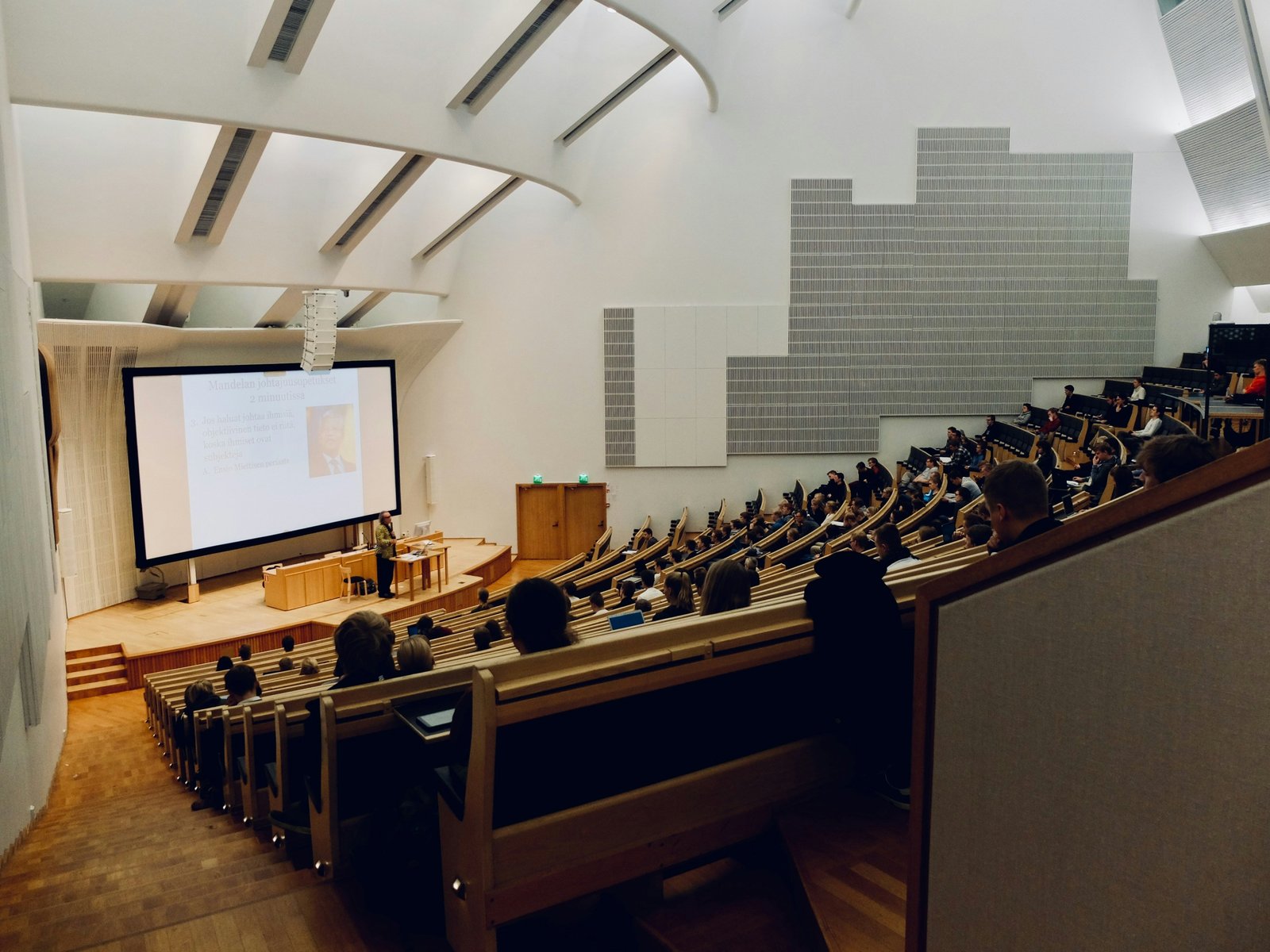
The mission of World Young Economist is to make economics more accessible, practical, and relevant for students. We help young people move beyond memorized concepts and use economics to understand the real issues shaping their lives: education, housing, work, technology, inequality, finance, trade, climate, and public policy.
Why the AI era needs a new economics education
AI can generate explanations, summaries, and fluent prose in seconds, but it cannot judge for the learner whether a question matters, whether a source is reliable, whether a conclusion is supported by evidence, or whose interests lie hidden within a policy choice.
WYE therefore treats AI literacy as part of economic literacy. Students may use tools responsibly, but must retain genuine ownership of their questions, reasoning, evidence, and conclusions.
What We Believe
Economics is not only an academic discipline but a public tool for understanding society.
Young people need not wait for extensive credentials to begin research.
Evidence matters more than a confident tone or complex jargon.
Good economic analysis lays out interests, costs, and trade-offs.
Revision is part of thinking, not a mark of failure.
Accessibility and rigor should reinforce each other.
A learning network with many entry points
Students join WYE from different entry points: some begin with a competition prompt, some submit existing essays to the Publication Pathway, and others join reading groups, build data projects, found school chapters, or apply directly for volunteer roles. No single programme is a required first step.
These experiences share one method: pose worthwhile questions, learn the relevant concepts, seek evidence, analyse incentives and trade-offs, communicate clearly, and reflect on limitations.
Independence & Fairness
Within each programme’s eligibility rules, WYE is open to students from different schools, countries, and educational backgrounds. Paid instruction is neither a prerequisite for WYE awards or publication nor a source of advantage in review. Where conflicts of interest exist, WYE manages them through disclosure, recusal, and appropriate independent or anonymized review.
Final review by practicing economics professors
WYE will invite economics professors from institutions such as the University of Chicago and Northwestern University to take part in final review decisions and to provide direct feedback on winning essays. Professors serve in their personal professional capacity; their participation implies no institutional affiliation with, or endorsement of, WYE.
The names, identities, and profiles of each cycle’s reviewing professors and team members will be published here once personally confirmed. WYE does not display unconfirmed rosters.
The faces building WYE
Everyone at WYE — students, founders and organisers alike — takes part as a volunteer. Hover to see who they are; click to read a full profile — including what they are thinking about now, and who they are beyond economics.
Member profiles below are placeholders and will be confirmed individually before formal release. Avatars use the Notion Faces line-art style — new members can generate their own at faces.notion.com and send it to the team.

{{ mQuote }}
{{ mBio }}
{{ mThinking }}
{{ mAtWye }}
{{ mBeyond }}

Where funding comes from, and how it returns to students
WYE may build a sustainable funding structure through individual donations, philanthropic grants, mission-related programme and course fees, membership dues, optional competition submission fees, school and institutional partnerships, and in-kind support such as software, data, venues, and expert time. Revenues are recorded separately by source and commitment:
2026 Annual Spending Targets
70% programmes | 20% governance & compliance | 10% fundraising & development
These are budget targets for 2026 — not completed historical results, nor uniform statutory ratios required by the IRS. Actual results will be published in the annual summary; material deviations will be explained.
Structural differences from a for-profit provider
The difference is not the quality of the service but the fact that the form of the organisation decides who the money finally reaches, and under what circumstances the institution says no. The table below compares the institutional differences between the two forms; it describes no specific provider.
WYE is currently an incubated independent programme under Zyan Economics Academy, a US 501(c)(3) tax-exempt organisation: that organisation is the financial and compliance entity that receives donations, administers funds, and files returns, while WYE operates independently in programme governance, judging, and publication.
An independent non-profit entity is planned for registration before 2029, or as soon as the programme can operate on its own finances, whichever comes first. The structural constraints described below apply during incubation too, because they are imposed jointly by the incubating entity’s 501(c)(3) status and WYE’s own programme charter. Once independent registration is complete, WYE will publish the new entity’s registration details and its first annual return.
Being for-profit does not mean lower quality, and non-profit status is not in itself a guarantee of quality — the form of the organisation constrains the incentive structure and disclosure, not competence. Whatever institution you choose, check three things: who the money is paid to, whether the promises can be verified, and whether a third party can inspect the finances.
How a research-mentorship fee flows
Of every $100 in Research Access programme funding, approximately $75 compensates the professional time of professors and mentors, and at most about $25 supports programme delivery and essential operations.
WYE does not adopt an allocation model in which the organisation retains $70 by default and mentors receive a minority. The programme-level 75% / 25% split and the organisation-wide 70% / 20% / 10% annual spending targets are two different accounting bases — they should not be conflated.
How the same money is usually split at a for-profit provider
Many providers of research mentorship, competition coaching, or “guaranteed publication” are for-profit companies. They can deliver excellent work, but their cost structure necessarily contains two items that do not exist in WYE’s structure: shareholder profit and customer acquisition and commercial promotion. The chart below is an indicative range for a common industry structure, shown to explain the difference in organisational form; it is not data on any specific provider.
For illustration of the mechanism only; official prices are as stated on registration pages. The 3 funded hours are not student debt, do not reduce mentorship quality, and do not oblige mentors to work unpaid.
A positive funding cycle
The point of this cycle is not repayment by students, but converting more revenue into genuine professor time and building long-term trust through transparent programme results.
Keeping more resources where the help actually happens
The 70% / 20% / 10% figures are budget targets; WYE is under no obligation to spend its administrative or fundraising budgets in full. As programmes scale, we will raise the share devoted to professor time, student feedback, awards, grants, and open resources wherever possible, while containing administrative and general operating costs — never at the expense of student protection, financial accuracy, data security, or legal compliance.
During the start-up phase, WYE maintains no general brand-advertising budget and undertakes no high-cost commercial promotion. Programmes rely first on open content, teacher and school networks, partners, student communities, and organic reach. Genuinely necessary small expenditures — programme recruitment, safety information, or compliant fundraising tools — will be capped, classified separately, and disclosed in the annual summary.
Funds designated for the Research Access Fund or student grants may not be used for general brand promotion.
Public fundraising for the Research Access Fund is in preparation
WYE plans to open public fundraising once the legal operating entity, receiving accounts, tax status, donation restrictions, and annual disclosure practices are confirmed. At that point we will state clearly who receives funds, whether donations are tax-deductible, platform fees, uses of funds, and reporting timelines.
- Partial or full mentorship grants for students with financial need
- Professors’ and mentors’ preparation, meeting, reading, and feedback time
- Professor feedback on winning essays and support for eligible students
- Essential student protection, mentor vetting, and programme oversight
- Research guides, templates, and economics resources kept free and open long-term
Annual transparency: WYE will publish actual spending results and explanations of any deviations in its annual summary. No completed fiscal year is yet available to report.